Ryan Mendes
Forward
The experienced attacker is Cape Verde's most creative player. His dribbling, crossing, and ability to produce moments of individual quality give the Blue Sharks a genuine threat in the final third.
CPV · Group H · Coached by Bubista · World Cup debut
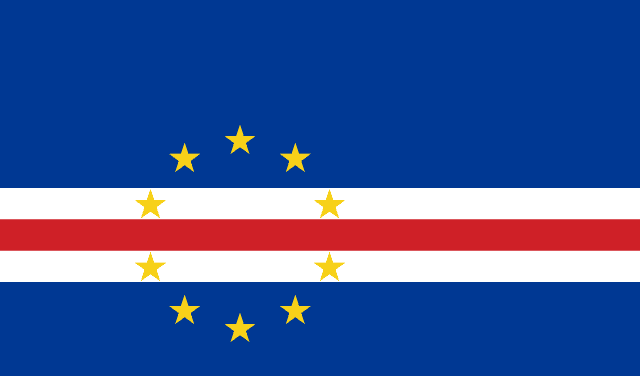

Última atualização:
Cape Verde — the Blue Sharks — make their historic FIFA World Cup debut in 2026, drawn into Group H alongside Spain, Saudi Arabia, and Uruguay. With a population of just 525,000 people, Cape Verde are one of the smallest nations ever to qualify for a World Cup, and their qualification is one of the most remarkable stories in the tournament's history.
The group is daunting. Spain are the reigning European champions and tournament favorites. Uruguay are two-time World Cup winners. Saudi Arabia upset Argentina at the 2022 World Cup. But Cape Verde are not here by accident — they qualified through the competitive CAF qualification process, and every minute on the pitch is a moment for the history books.
Why this group matters: Cape Verde's qualification transcends football. An archipelago of 10 volcanic islands in the Atlantic Ocean, with a population smaller than most mid-sized cities, competing against the best teams on earth. This is the ultimate proof that geography and population size do not determine footballing possibility.
Extra context for debutants: Cape Verde joined FIFA in 1986 and have steadily risen in African football, reaching the AFCON quarterfinals in 2013 and 2023. The diaspora is critical — an estimated 700,000 Cape Verdeans live abroad (more than live on the islands), particularly in Portugal, the United States (Massachusetts), France, and the Netherlands. Many national team players were born and raised in Europe.
| Match | Date | Time (ET) | Opponent | Venue |
|---|---|---|---|---|
| Group H – MD1 | June 15, 2026 | 1:00 PM | Spain | Atlanta Stadium, Atlanta |
| Group H – MD2 | June 21, 2026 | 7:00 PM | Uruguay | Miami Stadium, Miami |
| Group H – MD3 | June 25, 2026 | 9:00 PM | Saudi Arabia | Houston Stadium, Houston |
Spain on Matchday 1 in Atlanta is the dream assignment — the Blue Sharks against one of the world's best. Uruguay on Matchday 2 in Miami is the most competitive fixture. Saudi Arabia on Matchday 3 in Houston closes the group.
Forward
Midfielder
Winger
Goalkeeper
Cape Verde are making their World Cup debut in 2026. This is entirely new territory for the Blue Sharks.
This debut represents decades of grassroots development, diaspora talent identification, and an unyielding belief that small islands can compete on the world stage.
Bubista's manager deploys a defensive, organized system — typically a 4-5-1 or 5-4-1 — that prioritizes compactness and discipline. Against Group H opponents, survival is the first tactical priority.
Against Saudi Arabia, expect Cape Verde to be more adventurous, pressing higher and looking to control more of the ball.
Cape Verdean culture is defined by music — the island nation gave the world morna (made famous by Cesaria Evora) and funaná. Football fan culture is inseparable from this musical identity.
Why to watch if you are a casual fan: Cape Verde's story is extraordinary. An archipelago of volcanic islands with 525,000 people — fewer than the city of Fresno, California — competing at the World Cup. The players grew up across Europe and came together to represent a homeland many of them have only visited. When Cape Verde take the field against Spain, it will be one of the most emotionally powerful moments of the tournament. This is what the World Cup is for.
The group is the toughest possible draw for a debutant. Spain and Uruguay are among the strongest teams in the tournament, and even Saudi Arabia are experienced World Cup opponents.
Prediction: Group stage exit, with pride. Cape Verde will be competitive against Saudi Arabia and could spring a surprise, but advancing from a group with Spain and Uruguay is beyond realistic expectations. Scoring a goal would be celebrated for generations. A draw would be historic. Regardless of results, Cape Verde's presence at the World Cup is the victory.
#69
FIFA ranking
1
World Cups
Group H
Group
Debut (2026)
Best finish
Cape Verde has appeared in 1 World Cup. Their best result is Debut (2026).
Sources: Official match dates, venues, and draw details follow FIFA.com; confirm kickoffs, ticket phases, and broadcast rights there and on each host's listings as they are updated.
Cape Verde is an archipelago of 10 volcanic islands in the Atlantic Ocean, approximately 570 km (350 miles) off the west coast of Africa. It is located in the central Atlantic, west of Senegal and Mauritania.
Approximately 525,000 people live on the islands. An additional 700,000+ Cape Verdeans live abroad, primarily in Portugal, the United States, France, and the Netherlands.
Portuguese (official language) and Cape Verdean Creole (Kriolu), which is the most widely spoken language in daily life.
No — Curacao (150,000) is smaller. But Cape Verde are the second-smallest, and their qualification is equally remarkable.
Primarily in Massachusetts — particularly Boston, New Bedford, and Brockton. An estimated 265,000 Cape Verdean Americans live in the US, mostly in New England.
Through the CAF (Confederation of African Football) qualification process, competing against African nations with populations many times their size.
Most national team players were born in Europe (particularly Portugal, France, and the Netherlands) to Cape Verdean parents. The diaspora scouting system is Cape Verde's primary talent pipeline.
Currently ranked #69 by FIFA. Cape Verde have been ranked in the top 50-60 worldwide in recent years — a remarkable achievement for a nation of their size.
Cape Verde is in Group H for the 2026 FIFA World Cup draw.
Cape Verde lists Bubista as head coach heading into the 2026 tournament.
Cape Verde has competed in 1 FIFA World Cup editions through this cycle’s history.
Cape Verde's best run to date is Debut (2026).
The exact opponent, date, and kickoff appear in the schedule table on this page. All times are Eastern Time (ET).
Each row in the schedule shows the host city and stadium; Cape Verde rotates through those venues during the group stage.
Yes. Cape Verde can advance by finishing first or second in Group H, or by placing third with one of the eight best third-place records.